Breed guide
What Is a Shih Tzu? The Complete Breed Guide
The Shih Tzu, the little "lion dog", is Singapore's favourite HDB-approved lapdog: affectionate, sturdy, low-shedding and honest work to groom. Here is the whole breed, from Curious Tails, an AVS licensed shop that places them for a living.
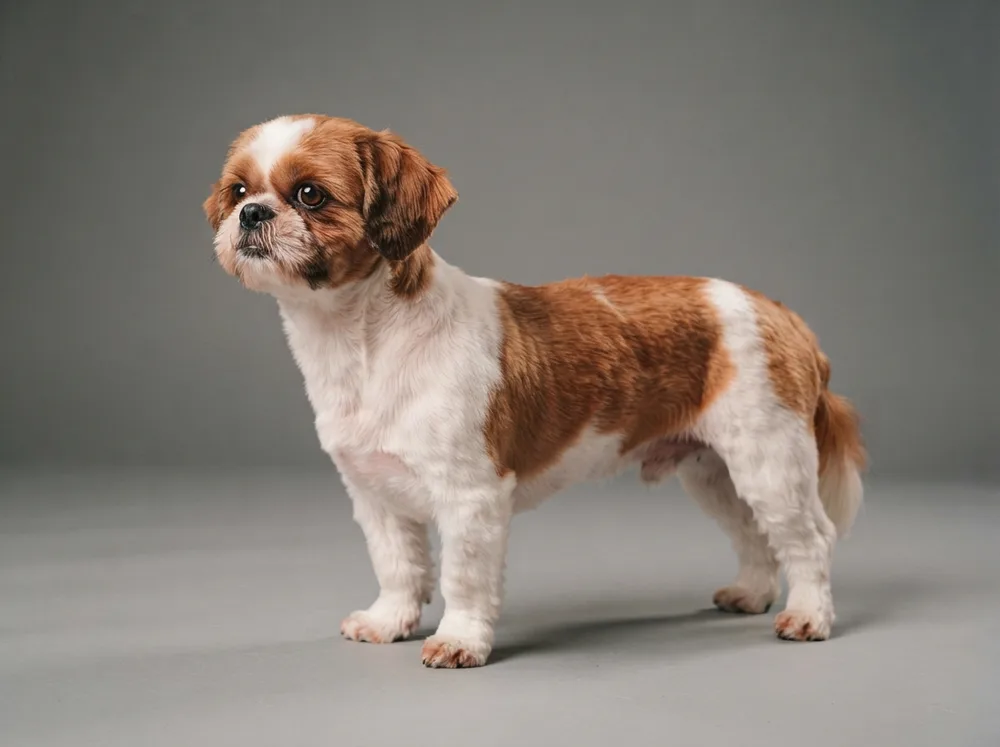
What is a Shih Tzu?
The Shih Tzu is a small companion dog, one of the toy breeds, developed in Tibet and China as a palace "lion dog" (獅子狗). Adults weigh about 4 to 7.5 kg, stand 20 to 28 cm tall and commonly live 10 to 16 years. It is affectionate, clever and a little stubborn, HDB-approved as item 48 in Singapore, and wears a hair-not-fur coat that needs daily brushing and a regular groom.
The HDB-approved lion dog, honestly explained
Shih Tzu at a glance
The Shih Tzu is a small companion breed, one of the toy dogs, developed over centuries in Tibet and China as a palace lapdog. The name means "lion dog" (獅子狗), and the whole animal is built for company rather than work: affectionate, clever, a little stubborn, and content to spend the day wherever its people are. In Singapore one fact matters most, that the breed is HDB-approved, item 48 on the official small-breed list, which makes it one of the few characterful dogs you can legally keep in a flat.
The figures below are the ones people search for first. A Shih Tzu settles at its adult size around 10 to 12 months; the price is the all-in band we publish for a healthy, licensed puppy in Singapore, $3,888–$4,888. Each number opens onto a fuller guide further down this page.
4–7.5 kg
Adult weight
20–28 cm
Height at the shoulder
10–16 yrs
Commonly cited lifespan
$3,888
All-in price, Singapore
Where the Shih Tzu comes from
The Shih Tzu is an old breed with a palace address. Its ancestry runs through Tibet, where small lion-like companion dogs were kept and gifted, and into the Chinese imperial court, where it was refined into the lapdog we know today. It was never a herder, guard or hunter; for something like a thousand years its only job was to be good company, and it is very good at it.
That history explains the temperament more than any training manual can. A dog bred to sit on laps and look regal grows up confident for its size, low in exercise needs, and firmly attached to its people. The "lion dog" name is a nod to the flowing coat and the bold little carriage, not to any working instinct. What you are bringing home is a thousand years of professional companionship.
Bred for a thousand years to do one job, keep people company, and it still treats that as the most important work in the flat.
What a Shih Tzu is actually like
Owners and breed references describe the same dog again and again: playful, affectionate, clever, outgoing and lively. Day to day it is a companionable shadow, sturdier and more outgoing than the fragile lapdogs it gets compared with, which is exactly why it suits busy family flats. It is famously good with children and gentle with elderly households.
The honest counterweight is a stubborn streak. This is a smart dog that decides for itself whether your idea is a good one, so housetraining takes longer than the internet promises and "instant obedience" is the wrong expectation. It is also a true companion breed: it does not enjoy long stretches alone, and it will let you know. Patience, routine and company are the whole recipe. There is more in our guide to the Shih Tzu temperament.
Temperament in brief
- Affectionate and people-first, a born lapdog
- Calm indoors, with low exercise needs
- Good with children and the elderly
- Clever but stubborn, so training is patient work
- Happiest with company; dislikes long days alone
How big does a Shih Tzu get?
A correctly bred Shih Tzu is a small dog, not a tiny one. Adults weigh about 4 to 7.5 kg and stand roughly 20 to 28 cm at the shoulder, with most of the growing done by 10 to 12 months. That is already flat-sized: sturdy enough to handle family life, small enough for an HDB living room.
Be wary of anyone selling a Shih Tzu on how small it will stay. "Mini", "imperial" and "teacup" are marketing labels, not a separate breed, and deliberately breeding for undersize trades a dog's health for a price premium. We explain why in full on the truth about mini and teacup Shih Tzus. A healthy, standard-sized dog is the goal.
| Measure | Typical range | Notes |
|---|---|---|
| Adult weight | 4–7.5 kg | Much the same for males and females |
| Height at shoulder | 20–28 cm | Measured at the withers |
| Fully grown | 10–12 months | The frame settles; the coat keeps growing for life |
| "Teacup" or "mini" | Not a real size | A marketing label we refuse to sell on |
The coat: hair, not fur, in six colours
The Shih Tzu's coat is its signature and its catch. It grows hair rather than fur, so it sheds very little, but that same continuously growing coat mats without daily brushing. Low-shedding is how the breed gets sold; it is not the same as hypoallergenic, and it is certainly not low-maintenance. Most Singapore owners keep a practical puppy cut for the heat rather than the long show coat.
Colour is a look, not a difference in temperament or price. We place six colour lines, and a solid black Shih Tzu grooms, behaves and costs exactly like a gold and white one. Tear stains simply show more on the light-faced colours, which is worth knowing before you choose, not after. There is a fuller breakdown in our guide to Shih Tzu colours and coats.
The colours we place
- Gold and white
- Black and white
- Brindle
- Liver and liver-white
- Red and white
- Solid black
How long do Shih Tzus live? Health, honestly
The commonly cited Shih Tzu lifespan is 10 to 16 years, longer than many larger breeds, and most of those years are healthy ones. The honest part is the flat face. The Shih Tzu is a brachycephalic breed: the short muzzle that gives it the famous face also narrows the airway, so flat-faced dogs run hotter and tire faster. In Singapore's climate that is a daily design question, not a footnote.
The prominent eyes need care too; they sit exposed, so they scratch and dry more easily than a longer-nosed breed's, and a quick daily wipe is part of the routine. None of this shortens the outlook by default, and none of it is a reason to avoid the breed. It is a reason to buy from someone who says it out loud. The full picture is in our honest health and lifespan guide.
Heat is the real risk in Singapore
A flat-faced dog cannot cool itself as easily. Walk early or late, keep a fan or aircon on through the hottest hours, and never a midday jog. Heavy laboured breathing or bright-red gums means cool the dog and get to a vet immediately.
Living with a Shih Tzu in an HDB flat
This is where the breed earns its place in Singapore. The Shih Tzu is HDB-approved, item 48 on the official small-breed list, so keeping one in a flat is completely legal. The rules are simple: one approved dog per flat, a mandatory AVS dog licence, and a fine of up to $4,000 for keeping a breed that is not approved. We complete the licence paperwork at purchase; the fuller version is on our page on the HDB rules for keeping a Shih Tzu.
Legality aside, the breed is genuinely built for flat living: calm indoors, low exercise needs, content with void-deck walks and an aircon afternoon. A working household can make it work, but a puppy needs midday attention for the first months, and this is a companion that would always rather you were home. Condo and landed homes are covered too; private housing simply allows more than one dog.
The HDB facts
- Approved: item 48 on the HDB list
- Limit: one approved dog per flat
- Licence: AVS dog licence, done at purchase
- Fine: up to $4,000 for a non-approved dog
- Size: about 4 to 7.5 kg, flat-friendly
Grooming and training: the two real commitments
If you take one thing from this guide, take this: the real price of a Shih Tzu is grooming, not the puppy. The coat needs a proper brush every day and a professional groom every 4 to 6 weeks at about $75 to $120 a session, which works out to roughly $900 to $1,400 a year for the life of the dog. We tell every buyer this before we talk price. Our grooming guide has the full cost table.
Training is the smaller commitment, but it has its own honesty note. The Shih Tzu is clever and eager to please, right up until it disagrees with you, so housetraining rewards patience and routine over drilling. Short, positive, consistent sessions win; frustration does not. Every puppy we place comes with a free lesson with an AVS-certified trainer for exactly this reason.
The honest arithmetic
"Low-shedding" is how the coat is sold; "high-maintenance" is what it costs. Budget the groomer before the puppy: a family that plans for $900 to $1,400 a year keeps the dog for its whole life.
The honest downsides of a Shih Tzu
A breed page with no downsides is a sales page, so here they are in plain words. The grooming is relentless and it is expensive. The flat face means real heat sensitivity in Singapore and eyes that need daily attention. The stubborn streak makes housetraining slow. And because it is a companion to its core, a Shih Tzu left alone all day, every day, is an unhappy Shih Tzu.
None of these are hidden defects; they are the shape of the breed, and every one is manageable if you go in with your eyes open. The buyers who regret a Shih Tzu are almost always the ones who were sold "low-shedding, low-maintenance" and believed the second half. If the checklist below sounds like your life, this is a wonderful dog. If it does not, we will say so.
Know before you commit
- Grooming: daily brushing, salon every 4 to 6 weeks, for life
- Heat: a flat-faced dog in a tropical climate needs managing
- Eyes: a daily wipe, kept clear of hair
- Training: patient, because the stubborn streak is real
- Company: not a breed for long days home alone
How the Shih Tzu compares with other small breeds
Most people researching the Shih Tzu are also cross-shopping the other HDB-approved toys. Here is the honest one-line take on each. All of them are legal in a flat; the real differences are grooming, energy, the muzzle and temperament. We place Shih Tzus, but the right dog for your household matters more than any single sale.
If one of the lines below fits your home better than the Shih Tzu does, follow it. The full head-to-head write-ups live on our breed comparison hub.
| Breed | Compared with the Shih Tzu |
|---|---|
| Shih Tzu | The sturdy, regal, easygoing companion; the catch is grooming and the flat-face heat profile |
| Maltese | Smaller and more delicate; better for calm, mostly-home households |
| Toy Poodle | Sharper and easier to train; needs more mental work |
| Pomeranian | Bolder and more vocal, with a heavy coat that blows |
| Bichon Frise | A similar grooming load, with springier energy |
| Lhasa Apso | The look-alike cousin; more aloof and independent |
Who a Shih Tzu is NOT for
The kindest thing a specialist can do is say no early. After placing 30+ Shih Tzus with Singapore families, we would rather talk you out of the wrong breed than sell you the wrong dog. Find your situation on the left; the right column is the honest answer we would give you across the counter at Balestier.
We would rather talk you out of the wrong breed than sell you the wrong dog.
| If this is you... | Then, honestly... |
|---|---|
| You will not budget $900 to $1,400 a year for grooming | This is the wrong breed; look at a lower-coat dog, or wait |
| You want a jogging or midday-walk partner | The flat face rules out exertion in Singapore heat; choose a long-muzzled breed |
| You are out of the house all day, every day | A companion breed will struggle; rethink the timing or the breed |
| You want fast, eager obedience | The stubborn streak will frustrate you; a Toy Poodle trains easier |
| You are shopping for a "teacup" size | We refuse the label; a healthy, standard Shih Tzu is the goal |
| You can plan for the grooming and the company | You are exactly who this breed is for, so message us |
Your guide to every Shih Tzu question
Frequently asked questions
Is a Shih Tzu a good house dog?
Yes, one of the best. The Shih Tzu was bred purely as a companion, so it is calm indoors, affectionate and happy in a flat. It is HDB-approved (item 48), sturdy with children and gentle with the elderly. The catch is grooming, not housing.
What is the common problem with Shih Tzu?
The most common issues trace to the flat face and the coat. The short muzzle brings heat sensitivity and prominent eyes that need daily care, and the continuously growing hair mats without brushing. None are dealbreakers; all are managed with routine, shade and a regular groom.
Does a Shih Tzu bark a lot?
No, it is one of the quieter small breeds. A Shih Tzu will alert-bark at the door or the lift lobby, but it is not a persistent yapper like some toys. Early routine and not rewarding attention-barking keep a flat, and the neighbours, peaceful.
What are the pros and cons of owning a Shih Tzu?
Pros: affectionate, calm indoors, sturdy, low-shedding, HDB-approved and great with families. Cons: a coat that needs daily brushing and a $75 to $120 groom every 4 to 6 weeks, heat sensitivity from the flat face, a stubborn streak in training, and a dislike of long days alone.
Can a Shih Tzu be left alone for 7 hours?
An adult built up to it can cope with a normal workday in a cool flat, but seven hours is the upper limit, not the goal. A puppy cannot; plan midday attention for the first months. This is a companion breed that would always rather have you home.
What are the negatives of a Shih Tzu?
The honest negatives are cost and commitment, not character. Expect roughly $900 to $1,400 a year at the groomer for life, daily brushing you cannot skip, tear-stain wipes around the eyes, slower housetraining thanks to a stubborn streak, and a dog that wants company most of the day.
Do Shih Tzus like sleeping with their owners?
Very much. Bred for centuries as a lapdog, the Shih Tzu is a people-first companion that loves to sleep close to its family. Many owners happily share the bed; if you would rather they did not, set that boundary from day one, because the habit is hard to undo later.
Meet your Shih Tzu
Come say hello at Balestier
2 Balestier Road #01-701, Singapore 320002 · Weekdays 12pm–6pm · Weekends 10am–6pm. Or message us first: tell us about your home and routine, and we'll tell you honestly if a Shih Tzu fits.
Ready to meet one?
See which Shih Tzu puppies are looking for a home this week, vet-checked and HDB-ready.
See available puppies