Grooming and coat
Matted Shih Tzu? Here is the rescue plan
Mats at the ears and hind legs are the Singapore special. Here is how to grade them, work out the ones you can save, and hand over the ones you kindly cannot.
Nelson and Kim, Curious Tails · AVS licence AS24J00046
What should I do with a matted Shih Tzu?
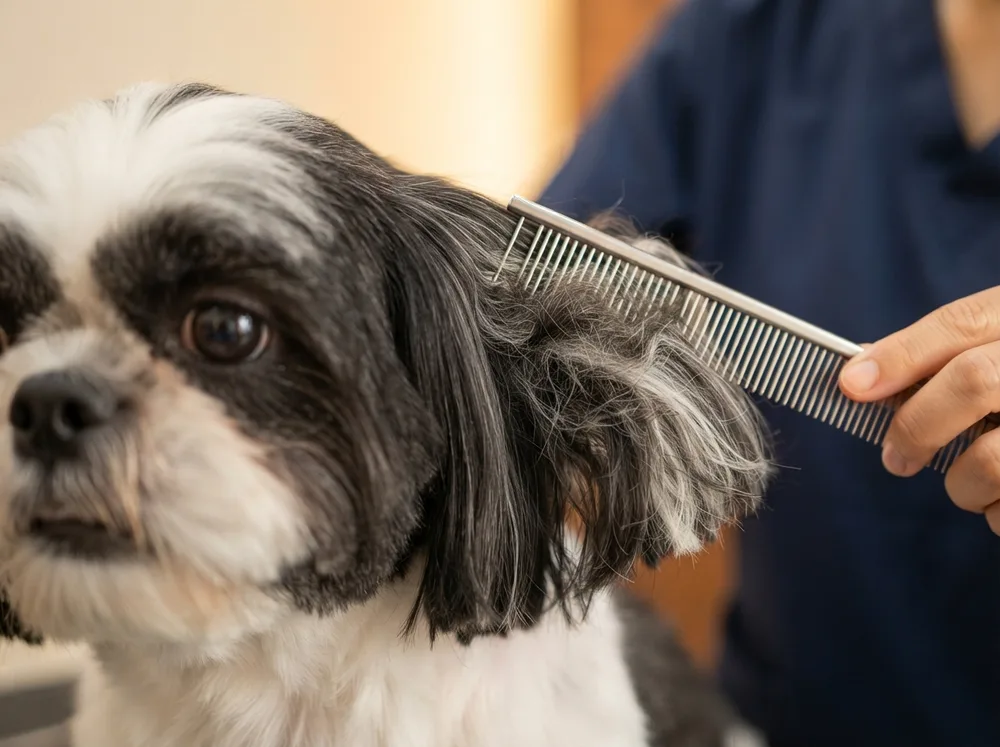
Grade the mat first. Loose tangles come out with a detangler spray, your fingers, and a steel comb worked from the skin outward. Tight mats felted against the skin belong to a groomer's clippers, not a marathon brushing session. Never bathe a matted dog, and in Singapore's humidity, act the day you find the mat, because damp air tightens it by the week.
Coat honesty, from a licensed shop
Why a Shih Tzu coat mats so fast in Singapore
A Shih Tzu has hair, not fur. It grows continuously, like yours, and the fine undercoat sheds into the outer coat instead of onto your sofa. That is the trade everyone calls "low shedding". The honest name for it is a high-maintenance coat: every dead hair stays trapped against a live one, waiting to tangle.
Singapore then stacks the deck. Humidity keeps the coat slightly damp all day, a rainy-season walk soaks the legs and belly, and moisture is what turns a tangle into felt. Add friction from a harness, a nap against the sofa, or a good ear scratch, and you get mats that formed in a weekend from a coat that looked fine on Friday.
We qualify every buyer on grooming readiness before a puppy leaves us, and matting is the reason why. It is not a cosmetic problem. A mat pulls on the skin with every step, traps damp against it, and can hide irritation you will not see until the groomer does. If mats have beaten you this week, this is the rescue plan we would give you over the counter.
The five hotspots: check these even when the coat looks fine
Mats are lazy. They form where hair rubs hair: behind the ears, in the armpits, along the collar or harness line, between the hind legs, and around the base of the tail. The ears and hind legs are the worst offenders in this climate, because ears get scratched and legs get rained on.
The trap is surface brushing. A slicker over the top layer leaves the coat looking glossy while felt quietly builds underneath. The only honest test is a metal comb pushed gently to the skin at each hotspot. If the comb glides through, you are clear. If it snags, you have found tomorrow's mat today, which is exactly when it is easiest to fix.
The comb-check map
- Behind both ears, where scratching rolls hair into knots
- Both armpits, worked by every step
- Collar and harness line, constant friction
- Between the hind legs, damp from grass and rain
- Base of the tail and the sanitary area
First, grade the mat: rescue job or clipper job?
Not every mat deserves the same answer, and pretending otherwise is how dogs learn to hate the brush. Before you pick up a tool, part the hair and look at what you are dealing with.
Two signals settle it. Can you see skin through the base of the mat, and can you wiggle the mat without the skin moving with it? If yes to both, it is a rescue job. If the mat is a solid felt pad stuck to the skin, or your dog flinches when you touch it, stop. That one belongs to Shih Tzu grooming in Singapore professionals, and going to them early is the kind move, not the lazy one.
| What you find | What it means | What to do |
|---|---|---|
| Loose tangle, comb snags then passes | Caught early | Detangler, fingers, comb through. Two minutes. |
| Tight knot, skin visible at the base | Rescue window | Work it in short sessions with the steps below. |
| Felt pad, no skin visible, moves with the skin | Past DIY | Groomer with clippers. Do not soak, do not saw at it. |
| Dog flinches, skin pink or damp under mat | Welfare issue | Groomer this week; mention the skin when you book. |
The rescue steps, in order
For mats that passed the grading test, the order of operations matters more than the tools. Work on a dry coat. Mist the mat and the hair around it with a detangler or leave-in conditioning spray and give it a minute to slip the hairs.
Fingers first. Hold the base of the mat against the skin with one hand so nothing pulls, and tease the edges apart with the other, splitting one big mat into several small ones. Then take the end tooth of a steel comb and pick at each small piece from the outer tip inward, always holding the hair at the base. The dog should feel tugging on hair you are holding, never on skin.
Finish by line brushing the area: part the hair, brush from the skin outward in small sections, then run the comb to the skin as the final proof. If the comb glides, the mat is genuinely gone rather than flattened. Work in sessions of a few minutes with treats flowing, and fold the habit into the daily brushing routine so you are maintaining, not rescuing, next month.
The 15-minute, three-mat stop rule
Here is the rule no tool listing will give you: stop after 15 minutes or three tight mats, whichever comes first, and book a groomer for the rest. Dematting is uncomfortable at best. Push past your dog's patience and you are not saving money, you are teaching a two-year-old dog to fight the brush for the next decade.
We would rather talk an owner out of a marathon dematting session than watch them win the mat and lose the dog's trust. A coat grows back in months. A dog that hides under the bed when the comb comes out takes far longer to undo.
Win the mat, lose the trust, and you have lost the trade. Stop early. Hair grows back faster than confidence.
Never bathe a matted dog, and the other accelerants
The most common well-meant mistake in this story: "the coat looks bad, let's give him a bath first." Water does to a mat what it does to wool in a hot wash. It felts. Every tangle that goes into the bath comes out tighter, and a shampooed pelt can become unbrushable. Brush and comb fully first, bathe after.
The rainy-season version of the same mistake is the wet walk that air-dries. Legs and belly come home soaked, the dog naps, and the damp hair felts where it lies. Towel firmly, dry with a dryer on cool while brushing the leg feathering, and take the harness off the moment you are home. Damp skin under a mat is also where irritation starts, which is a coat problem becoming a Shih Tzu health and lifespan problem.
Put the scissors down
Do not cut mats out with scissors. Skin tents up into the base of a mat, you cannot see where hair ends and dog begins, and scissor wounds from home dematting are a classic vet visit. If it needs cutting, it needs clippers in trained hands.
When the kind answer is the clippers
If the grading test said "felt pad", let it go. A full shave-down under the mats is not a grooming failure, it is the humane reset, and any good groomer will tell you the same: hours of pulling at a pelted coat is misery for the dog, while ten minutes of clipper work under the mat is not.
The coat comes back. Expect a slightly different texture for the first weeks and a few months to real length. Plenty of Singapore owners meet the shaved version of their dog and never go back to the long coat at all, because the short coat suits the heat, and keeping a Shih Tzu cool in Singapore heat is a daily job here anyway.
It is a reset, not a defeat
A shaved Shih Tzu is still a Shih Tzu. You get a clean start, a comb that glides, and a chance to build the daily habit on an easy coat before the length returns.
What a Singapore groomer will do, and charge
A standard salon groom in Singapore runs about $75 to $120 a session, and a matted coat can add a dematting fee on top, priced by time. Some salons will simply decline heavy dematting on welfare grounds and recommend the shave, which is the right call, not an upsell. Be upfront when you book: say the word "matted" and where, so they can quote honestly.
The sustainable rhythm for this breed is a professional groom every 4 to 6 weeks, roughly $900 to $1,400 a year, for the life of the dog. That number is the real price of the breed, which is why it sits inside how much a Shih Tzu costs and why we say it before anyone buys. Matting SOS posts get read when that budget was skipped.
$75–120
SG salon groom, per session
4–6 wks
Sustainable groom cadence
$900–1,400
Grooming per year
15 min
Your DIY dematting limit
Prevention that actually holds in the tropics
Everything above is triage. Prevention is five minutes a day: line brush to the skin every day or two, comb-check the five hotspots, dry the dog properly after wet walks, and keep collars and harnesses off at home. Keeping the Shih Tzu puppy cut makes all of it easier; a short practical coat in this climate mats a fraction as much as a floor-length one, and the topknot and ears are the only long hair left to manage.
One warning owners consistently report being blindsided by, in r/shihtzu threads and local forums alike: the puppy-to-adult coat change at around 9 to 12 months. The soft puppy coat sheds into the incoming adult coat and the whole dog can mat in days. Double the brushing for those months and keep the groom appointments short-cycled, and you will sail through the stretch where most first mats happen.
Keep exploring
Frequently asked questions
Do mats actually hurt a Shih Tzu?
Yes. A mat pulls on the skin with every movement, traps moisture against it, and can hide irritation or broken skin underneath. Matting is a comfort and welfare issue, not a cosmetic one, which is why groomers take it seriously.
Can I cut a mat out with scissors?
No. Skin tents up into the base of a mat, so you cannot see where hair ends and skin begins, and scissor injuries from home dematting are a classic emergency vet visit. If a mat needs cutting, it needs clippers in a groomer’s hands.
Why does my Shih Tzu mat more in the rainy season?
Moisture felts hair. Rain-soaked legs and a humid coat tighten existing tangles and speed new ones, especially between the hind legs and behind the ears. Towel and cool-dry the coat after wet walks and comb through the damp areas.
Should I bathe my dog before dematting?
Never. Water tightens mats the way a hot wash felts wool, and a shampooed matted coat can become unbrushable. Brush and comb the coat fully first, then bathe.
Will the coat grow back after a shave-down?
Yes. Expect a slightly different texture for the first few weeks and a few months to full length. Many Singapore owners keep the shorter cut afterwards because it suits the heat and mats far less.
How often should I brush to prevent matting?
Line brush to the skin every one to two days, about five minutes a session, and comb-check the hotspots: behind the ears, armpits, collar line, hind legs and tail base. A comb that glides to the skin is the only real proof the coat is mat-free.
When should I give up and go to a groomer?
Use the 15-minute, three-mat rule: stop after either limit and book a professional. Go straight to the groomer if a mat is felted to the skin, the skin looks pink or damp beneath it, or your dog flinches when it is touched.
Meet your Shih Tzu
Come say hello at Balestier
2 Balestier Road #01-701, Singapore 320002 · Weekdays 12pm–6pm · Weekends 10am–6pm. Or message us first: tell us about your home and routine, and we'll tell you honestly if a Shih Tzu fits.
Still deciding?
Read the price guide first: every dollar explained, no surprises at the shop.
See the price guide