Grooming, honestly
Managing Shih Tzu tear stains
Those rust-red streaks are porphyrin chemistry plus a flat face, and Singapore's humidity makes them worse. Here is the two-minute routine that works, and the products that are theatre.
Nelson and Kim, Curious Tails · AVS licence AS24J00046
What causes tear stains on a Shih Tzu?
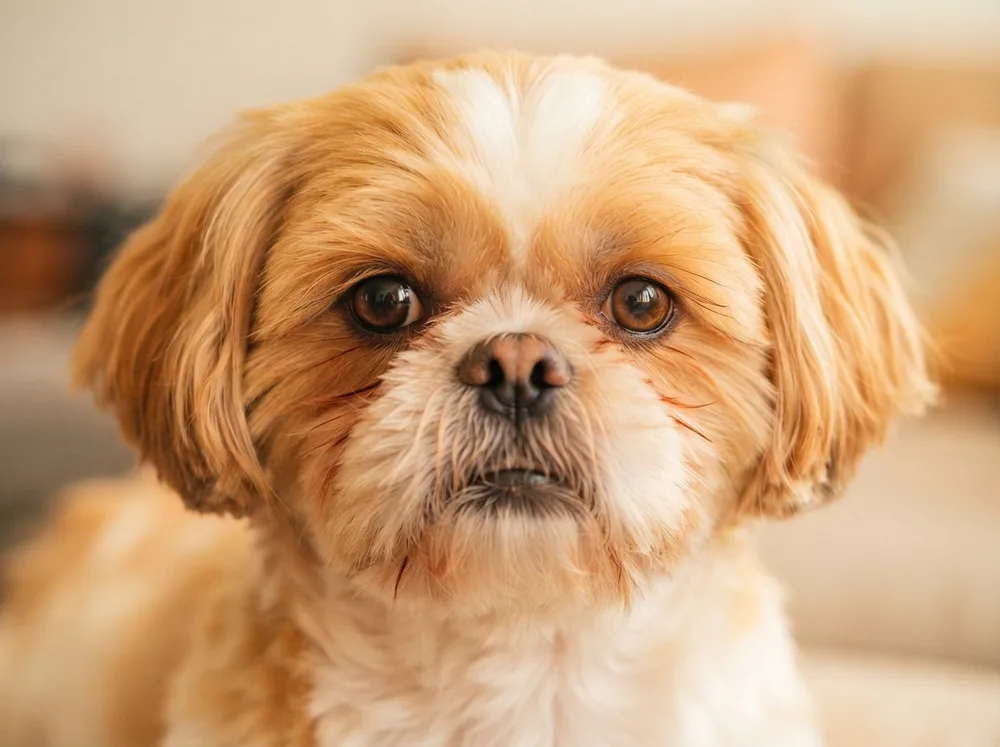
Tear stains are reddish-brown streaks under the eyes caused by porphyrin, an iron-carrying molecule in tears that darkens as it meets air. A Shih Tzu's flat face and shallow eye sockets let tears overflow onto the cheek fur instead of draining away, so the breed stains more than most. Daily wiping, drying, and a face trim manage it; most faces improve within four to six weeks.
Clean faces, honest answers
Why the Shih Tzu face stains more than most breeds
Porphyrin is the pigment behind the rust colour. It is a normal by-product of red blood cell breakdown, excreted in tears and saliva, and it oxidises darker the longer it sits on fur, as PetMD's veterinary guide to tear stains explains.
The Shih Tzu adds three multipliers of its own. The flat face and shallow sockets tilt the tear ducts so tears spill forward rather than draining; the face hair grows straight into the eye line and wicks moisture down the cheeks; and the beard collects water at every drink, so the whole lower face stays damp. The American Shih Tzu Club notes that staining is common even in perfectly healthy dogs of the breed.
Coat colour decides how much you notice. Of the colours we place, gold and white or red and white faces show every streak, brindle partly hides it, and a solid black face can be staining away invisibly. The stain is the same; the contrast is not.
Why this breed, in short
- Porphyrin in tears turns red-brown in air
- Flat face + shallow sockets = tears overflow
- Face hair wicks moisture into the cheeks
- Light coats (gold & white, red & white) show it most
Are tear stains harmful, and when should a vet look?
In most Shih Tzus, tear stains are cosmetic. The dog is comfortable, the eyes are bright, and the only problem is the colour on the fur.
The exceptions matter. Staining that appears suddenly in a dog that never stained can mean a blocked tear duct or a new source of irritation, and MedVet's ophthalmology guidance says that change deserves a vet visit rather than a new wipe. The breed's prominent eyes also carry their own risks, dry eye and corneal ulcers among them, which we cover separately in our guide to caring for a Shih Tzu's eyes.
See a vet, not a shop, if you notice
- Sudden staining in a dog with no history of it
- Green or yellow discharge instead of clear tears
- Squinting, pawing at the eye, or a visibly sore eye
- A red, swollen, or cloudy eye of any kind
What is the daily routine that actually works?
The routine takes about two minutes and beats every product on the shelf. Wet a cotton pad with lukewarm water or a pet-safe eye wipe, hold the chin steady, and wipe from the inner corner outward, always away from the eye.
Then do the step almost everyone skips: dry the fur with a soft cloth. In Singapore, a damp face does not dry itself; it ferments. We tell every buyer this before price ever comes up, because the wipe-and-dry habit sits inside the same daily commitment as the brush.
The two-minute routine
- 1. Damp cotton pad or pet-safe wipe
- 2. Wipe inner corner outward, away from the eye
- 3. Dry the fur properly with a soft cloth
- 4. Repeat morning and evening
Does Singapore humidity make tear stains worse?
Yes, and it is the part overseas articles never mention. At 80 to 90 percent humidity, tear-soaked face fur stays wet for hours, and warm damp fur is exactly where yeast and bacteria multiply. That microbial layer deepens the colour and adds the sour smell owners complain about.
A recurring thread among owners on r/shihtzu is that stains darken in humid months and improve when the dog sleeps in an air-conditioned room. That squares with the mechanism: less damp time, less growth. The practical fixes here are the drying step above, a shorter face trim, and aircon hours where you can manage them.
The stain is chemistry. The smell is biology. Singapore's humidity feeds the second one.
Wipes, supplements and home remedies: what works, what is theatre
Owners report good results from oral supplements, and the honest answer is that the evidence is mixed. Vet sources treat them as unproven, some owners swear by them, and the reliable levers remain the boring ones: wiping, drying, trimming and diet quality.
Here is our plain-spoken verdict on the usual options.
| Option | Verdict | Notes |
|---|---|---|
| Daily wipe + dry | Works | The foundation. Free. Two minutes a day. |
| Face trim at every groom | Works | Less hair in the eye line, less wicking. |
| Pet-safe eye wipes or saline | Works | Convenient version of the wipe step. |
| Diet quality + probiotics | Helps some dogs | Fewer fillers can lower the porphyrin load. |
| Filtered water, steel bowl | Helps some dogs | Cheap to try; plastic bowls harbour bacteria. |
| Oral supplements | Owner-reported | Unproven in vet literature; give any trial 6 weeks. |
| Whitening pastes, peroxide | Avoid | Harsh chemistry next to a prominent eye. |
What should never go near a Shih Tzu’s eyes?
Nothing caustic, ever. The Shih Tzu's eyes sit shallow and exposed, which means a splash that another breed would blink off can scratch or burn a cornea here.
That rules out hydrogen peroxide, anything containing bleach, vinegar on the face, and human makeup remover. If a product's label would worry you near your own eye, it has no business near an eye that bulges further than yours.
Skip these entirely
Hydrogen peroxide, bleach-based whiteners, apple cider vinegar on the face, and human cosmetics. If something does get in the eye and the dog squints or paws at it, rinse with saline and call your vet.
Grooming choices that quietly reduce staining
A good groomer is half the battle. Ask for a tidy face trim at every session so hair stops growing into the eye line, and keep the top-knot or a short crown so the fringe stays out of the tears. For most homes here, the puppy cut keeps the whole face shorter, cooler and easier to dry.
The cadence is the same one we quote for the coat overall: a professional groom every four to six weeks, at roughly $75 to $120 a session in Singapore. Our full guide to Shih Tzu grooming in Singapore covers the costs and choices; the first professional groom is included with every puppy we place.
How long until the stains are gone?
Four to six weeks of consistency, honestly. Wiping stops new pigment from building, but fur that is already stained holds its colour until it grows out or the groomer trims it away, so judge progress by the new growth near the skin, not the old tips.
Puppies deserve extra patience. Many tear heavily while teething and improve on their own once the adult teeth settle, usually before the adult coat comes in. Tear stains on a vet-checked puppy are a grooming note, not a health verdict.
4-6 wks
To visible improvement
2 min
Daily routine
4-6 wks
Groom cadence
$75-120
Per SG groom session
The honest place of tear stains in the grooming ledger
Tear stains are two minutes inside a commitment you have already made if you own this breed: the daily brush, the wipe, and a groom budget of about $900 to $1,400 a year. The coat sheds little but demands much, which is also why so many buyers ask us whether Shih Tzus shed and are surprised by the real answer.
It is why our Shih Tzu specialists ask the grooming-readiness question before any price talk. We would rather talk you out of the wrong breed than sell you the wrong dog; if a two-minute face wipe already sounds like too much, that answer just saved you both.
Keep exploring
Frequently asked questions
What causes tear stains on a Shih Tzu?
Porphyrin, an iron-carrying pigment in tears, darkens on the fur as it meets air. The Shih Tzu’s flat face and shallow eye sockets let tears overflow onto the cheeks instead of draining, so staining is common even in healthy dogs.
Are Shih Tzu tear stains harmful?
Usually not; in most dogs they are cosmetic. See a vet if staining appears suddenly, if discharge turns green or yellow, or if the dog squints or paws at the eye, since those point to a medical cause rather than normal tearing.
How do I remove my Shih Tzu’s tear stains at home?
Wipe under each eye with a damp cotton pad or pet-safe wipe, moving away from the eye, then dry the fur thoroughly. Do it twice daily, keep the face hair trimmed, and expect visible improvement in four to six weeks.
Do tear stain supplements actually work?
The evidence is mixed. Many owners report good results, but veterinary sources treat supplements as unproven. Try one for six weeks if you like, but keep the daily wipe-and-dry routine and the face trim, which are the reliable levers.
How long does it take for tear stains to go away?
About four to six weeks with a consistent routine. Already-stained fur keeps its colour until it grows out or is trimmed, so look for clean new growth near the skin as your progress marker.
Does Singapore’s humidity make tear stains worse?
Yes. Damp face fur stays wet for hours in our humidity, which lets yeast and bacteria multiply, deepening the colour and adding a sour smell. Drying the face after wiping and keeping the trim short matter more here than in dry climates.
Will my Shih Tzu puppy grow out of tear stains?
Often, partly. Puppies tear heavily while teething and many improve once adult teeth settle. Some staining usually remains a lifelong grooming task in this breed, managed with the daily wipe and regular face trims.
Meet your Shih Tzu
Come say hello at Balestier
2 Balestier Road #01-701, Singapore 320002 · Weekdays 12pm–6pm · Weekends 10am–6pm. Or message us first: tell us about your home and routine, and we'll tell you honestly if a Shih Tzu fits.
Still weighing the grooming?
Read the full cost and cadence picture before you commit.
See the grooming guide